
Full Bag Fitting and Planning Your Next Equipment Purchase
Alameda Golfworks | Fitting & Equipment Guides
Full Bag Fitting and Planning Your Next Equipment Purchase
A complete-looking set does not always provide a complete range of useful shots. Two clubs may carry much the same distance, while another part of the bag leaves you without a comfortable option.
Gapping is the process of understanding those distances and deciding whether each club has a useful place. The goal is not a perfectly symmetrical chart. It is a bag you can make sensible decisions with during a round.
For Bay Area golfers planning several equipment purchases, full-bag fitting offers a way to consider those decisions together. At Alameda Golfworks, set makeup follows the golfer's results and needs rather than a fixed expectation about which club numbers everyone should carry.
An iron upgrade may change the wedge transition. A different long-club arrangement may make more sense than buying another long iron. Planning those relationships before ordering helps you choose a useful set, whether the purchase covers several categories or one carefully selected addition. The shop's full-bag fitting excludes putter fitting; confirm the appointment scope when calling.
Begin with representative carry distances
Carry is the distance the ball travels through the air before landing. Total distance also includes what happens afterward. When you are trying to understand gaps for landing near a target or carrying an obstacle, keep those ideas separate.
Record typical results rather than the longest shot you have ever hit. If a club produces substantial variation, note that too.
A precise-looking distance that represents only your best swing can be less useful than a realistic range. The aim is to understand the equipment you actually take to the course.
You do not need perfect contact to begin, but avoid drawing a firm conclusion from one or two unusual shots.
Identify overlap before buying another club
Start by looking for neighboring clubs that do much the same job.
This often becomes noticeable among longer irons. A golfer may produce useful separation through the middle of the set, then find that the longer irons no longer create distinct carries.
That observation does not identify the cause on its own. The club specifications may deserve checking. Strike and the ability to produce useful launch and flight also matter.
Adding a new club without understanding the overlap can simply create another version of the same problem.
Compare long irons with other shapes
A hybrid or higher-lofted fairway wood may be worth testing when a long iron does not earn its place. The choice should consider ball speed, launch, spin, strike, and confidence.
Do not select a replacement solely by matching a printed loft. The question is what the actual club does for the golfer and whether it provides the needed shot.
For example, a seven-wood or nine-wood may be a useful comparison for some players. It is not a rule that every player needs one.
A bag does not have to use the same club shape throughout. The result should determine whether the combination is sensible.
Give the fairway wood a clear job
Tell your fitter how you intend to use a longer club. A fairway wood used primarily from the tee may be judged differently from one you need for approaches from the ground.
If you avoid a club in a common situation, explain that. A successful shot in another setting does not settle whether it solves the original problem.
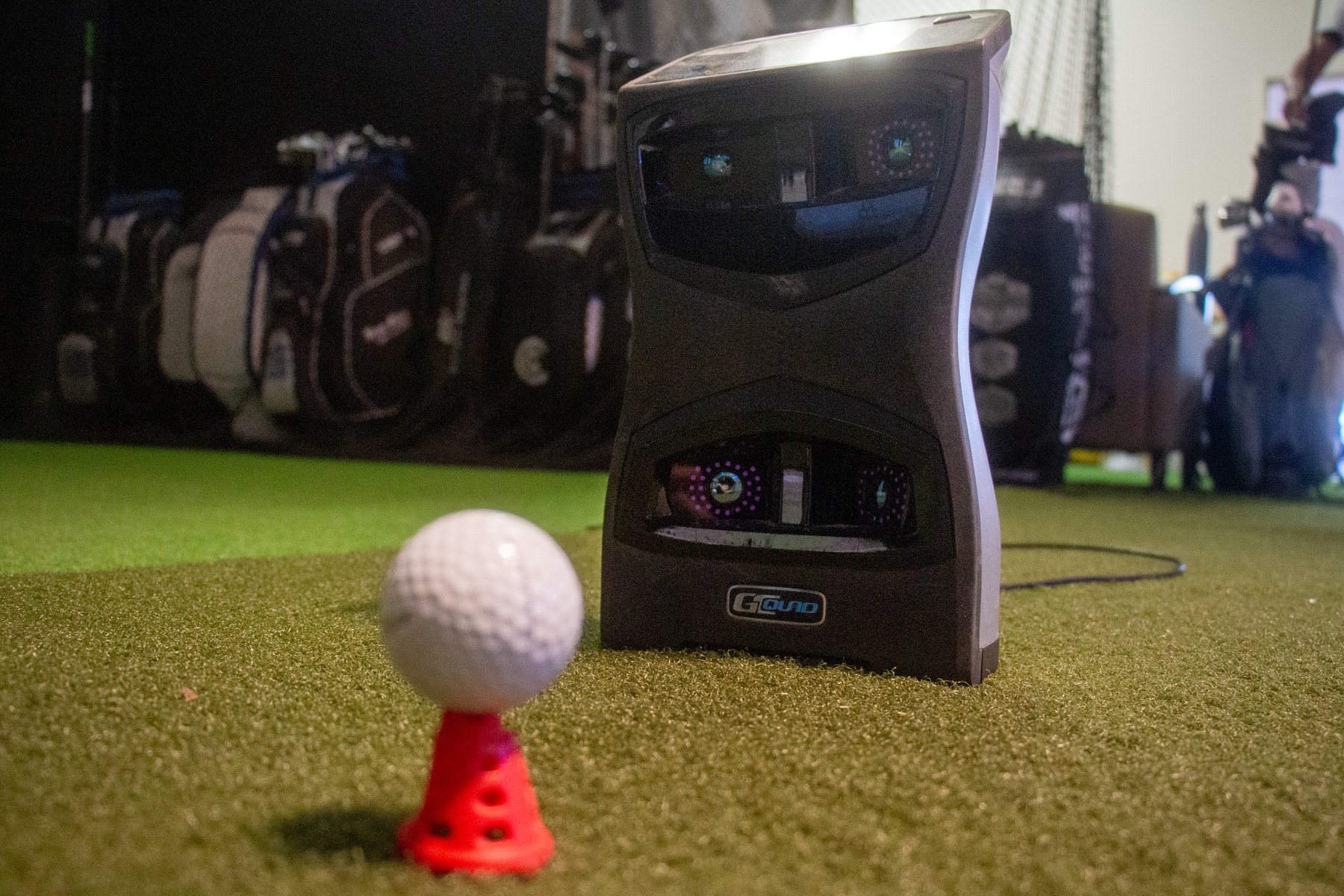
Indoor comparisons help assess flight and contact in that environment. They do not recreate every lie you will encounter during play.
The recommendation should acknowledge the intended use rather than simply select the longest option in the fitting bay.
Check the pitching wedge transition
The bottom of the iron set deserves as much attention as the top.
Understand what your pitching wedge normally carries and compare it with the next wedge. This becomes especially important after changing iron sets, because a familiar wedge arrangement may no longer provide the distances you need.
An awkward gap does not automatically call for another wedge. A specification check or a different arrangement may be appropriate.
The right number of wedges depends on the shots you need and how the rest of the bag is organized, not a standard loft sequence copied from another golfer.
Think about distances and uses together
A club may have value beyond a single full-swing carry number. The important thing is that you can explain why it belongs.
When two clubs overlap in distance, ask whether they provide genuinely different useful shots or whether one is rarely chosen. That discussion should be grounded in how you play, not an invented reason to preserve every club.
Conversely, a large-looking gap on a chart may not be your biggest practical issue. If another club is consistently unusable, that may deserve attention first.
A gapping review is a way to prioritize decisions, not an instruction to rebuild the entire bag.
Learn the actual fitted set
An iron fitting commonly starts with a seven iron to narrow the setup. After the completed clubs arrive, it is useful to become familiar with the distances of the set you received.
Customers who have received fitted clubs can use a complimentary, self-directed hour on the shop's launch monitor for this purpose. It is not a guided gapping appointment or another fitting lesson.
Take a simple record of typical carries and any unexpected overlap. If something needs investigation, bring the observation back to the shop rather than trying to diagnose it from a single session.
Discuss arrangements for the hour by phone.
Use observations from the course
A monitor session gives you a reference, while rounds provide additional context. Record which clubs you used, whether contact was representative, and what seemed different.
Avoid treating one surprising result as proof that the specifications are wrong. A repeated pattern provides a better reason to ask for a check.
If distances have changed unexpectedly, loft and lie evaluation may be part of the conversation. Any adjustment needs to suit the specific club and should be assessed by the shop.
Aim for a bag you understand
Before placing a multi-club order, review the proposed set as a whole. Which clubs are new, which stay, and what role should each fill? Confirm the heads, shafts, grips, specifications, total cost, and availability. A coordinated purchase does not require every club to be the same brand or every component to carry an upcharge. It requires a clear explanation of how the pieces work together for you.
The most useful result is knowing the normal role of each club and where uncertainty remains.
You may decide to replace a long iron, reconsider wedges, adjust a suitable club, or keep the current set. The recommendation should explain why.
Planning a new set or changes across several categories? Call Alameda Golfworks at 510-337-1975 to discuss a full-bag fitting. Explain your purchase goals when arranging the visit, and bring your full bag so the comparison includes what already works.